There are many different ways to treat the Obstructive Sleep Apnea Syndrome. It depends on the medical history of the patient, on the level of the disorder and, most of all, on the causes of the obstruction.
CHILDREN:
The children's sleeping apneas are almost always caused by inflamed or hypertrophic tonsils and adenoids; they lead to a mechanic obstruction and are often treated surgically.
ADULTS:
The treatment for sleeping apnea in adults having narrow nose-mouth airways is very diversified.
Some of the treatments lead to lifestyle changes such as:
- avoiding alcohol
- avoiding drugs that relax the central nervous system (such as sedatives and drugs for muscles relaxation)
- losing weight
- quit smoking
| C-PAP | |
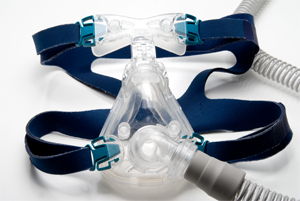 | In case these traditional methods are inadequate, doctors often use the C-PAP (Continuous Positive Airway Pressure). The patient wears a hose to a nasal pillow, nose mask, full-face mask and the machine delivers a stream of compressed air in the airways, so that avoiding the collapsing of the muscles while breathing. The C-PAP is connected to a turbine that generates a stream of air having constant pressure. The necessity for using this machinery and the air pressure are defined by a specialized doctor, whose decisions are based on a sleeping test or on titration. New types of C-PAP are now available: they slightly reduce the pressure while exhaling to increase the level of the patient's comfort and his acceptance of the machine. C-PAP is at the moment the most common way to treat the obstructive sleeping apnea syndrome. |
| ORAL DEVICES | |
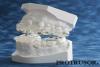
 | Another way of treating this syndrome is an oral device which pushes forward the mandible (the Mandibular Advancement Splint). This technique is used in low or mild levels of OSAS. This device is a dental prosthesis like the ones that are used to straighten the teeth or to protect them while doing sports. For the patients affected by sleeping apnea, the device is designed so that it pushes the jaw slightly more down and more forward than usual, so that to limit the consequences of the relaxation of the neck muscles while sleeping. In this position, the tongue is much further from the back of the mouth and in some patients it can be enough to prevent sleeping apnea or to allow them to reach a better breathing. The American FDA accepts more than 40 oral devices to treat sleeping apnea. You can find the list in the following website: www.fda.gov. Using oral devices gives similar results to C-PAP for what concerns symptoms and the health status is much more user friendly. But for these devices to work, it is necessary for the jaw to be moved a few millimeters (at least 5 or 6) forward without it to cause muscles or articular problems. In case of serious temporomandibular joint disorders, these devices are better be avoided. On the other hand, they could help curing these mild disorders thanks to the jaw's forward movement. Dental devices need to be anchored to the teeth, which need to be able to support the forces practiced by the chewing muscles, that tend to bring back the jaw to its usual position. Usually, at least 8 healthy teeth per dental arch are necessary, but it exists also a special kind of Somnodent device that can be used in some patients in the lower dental arch, as well. |
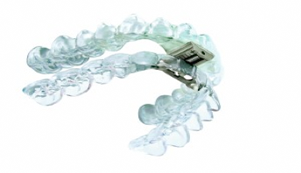 | TAP: This device attaches the two dental arches together by utilizing a small hook, which position can be adjusted by the patient, using of a small detachable key. |
 | SOMNODENT: In this device the forward movement of the jaw is possible thanks to the advancing of the flippers linked to the lower dental arch when closing the mouth. The patient can modify the device's regulation by screwing or unscrewing two small screws on the upper dental arch. It's the only device that can be used also by patients who have no teeth on the upper dental arch. |
 | SILENSOR: It's a simple device whose main characteristic is that to move the jaw as forward as the degree of mouth opening. It's used specifically by people with snoring problems: this device starts working only when the patient's mouth opens, so that to reduce the troubles caused by the jaw's forward movement. |
| PHARMACEUTICAL TREATMENTS | |
 | Despite more than twenty years of research and tests, there are now only a few pharmaceutical treatments that can be used to cure the obstructive sleeping apnea syndrome. The oral use of theophylline (a metilxantine, whose chemical structure is similar to caffeine) can reduce the number of apnea episodes, but can also lead to an adverse drug reaction such as palpitations and insomnia. Usually, theophylline is not useful in adult cases of OSAS, but it's used often to treat the Sleeping central apneas and it can be also used to treat children's apnea. |
| SURGERY | |
 | At the moment there is a number of different surgeries that can be applied to modify the dimensions or the muscle tone of the patient's airway. Tracheotomy has been for many decades the only effective way of treating sleeping apneas. Now it's used rarely, for those untreatable cases (very rare) that couldn't be cured through other therapies. Modern therapies use one or more techniques, according to the patient's needs. The number successes on the long term is often low (15%): this leads the doctors to use C-PAP as a therapeutic "gold standard".
|