OSA (obstructive sleep apnea) is a problem that affects officially more than two million Italians.
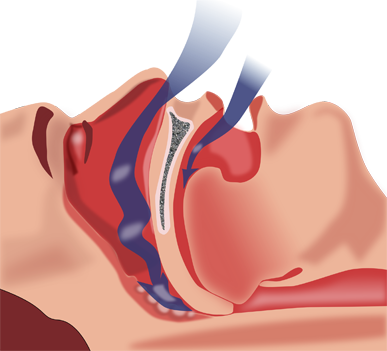
It has been described for the first time in 1965 as a pathological alteration characterized by “pauses” or breaks in the normal breathing act during one's sleep.
Apnea comes from the Greek word “apnoia”, which means “without breath”, because in people affected by apnea, breath literally stops many times while they are sleeping. This apnea lasts for at least 10 seconds, sometimes for an even longer period of time, and it happens for more than one hundred times during one single night. To defend itself from this dangerous reduction of the amount of oxygen reaching the brain, it is necessary for the brain itself to "wake up" - even just for a few seconds. Most of the times, the patient isn't aware of these awakenings, that's why they are called "arousals" or "unconscious mini awakenings".
There are three kinds of sleeping apnea: it can be obstructive, central or mixed.
Obstructive apnea is characterized by the obstruction of the upper airways and a continuous breathing effort.
Central apnea occurs when the airflow stops and there is no breathing effort caused by the temporary loss of neural impulse to all muscles of the breathing system.
Mixed apnea occurs when the stopping of the airflow, which begins without breathing effort, ends with a progressive breathing effort.
Keep on reading
>Apnea symptoms